
System Safety - Managing Explosion Risks

Protecting People, Property & Productivity in Hazardous Environments

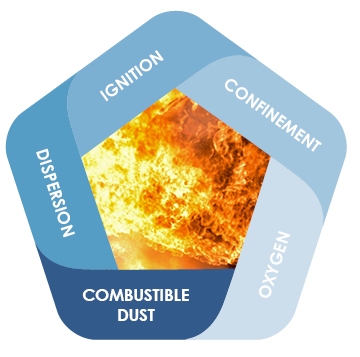
A reliable dust and fume extraction system is essential not only for maintaining good air quality, but also for protecting your workplace from potentially devastating explosions. Many types of industrial dust — including metal, plastic, wood, chemical, and food dust — can become highly combustible when dispersed in the air. When fine particles accumulate within ducting, filters, or collection systems and come into contact with an ignition source, the result can be rapid and violent combustion.

Without appropriate safety measures in place, combustible dust incidents can lead to serious injuries, costly equipment damage, extended downtime, and, in the worst cases, loss of life. That’s why explosion protection and correctly designed extraction systems should never be treated as an afterthought.

AtSource works with trusted global suppliers and specialist partners to design and deliver compliant dust and fume extraction solutions. Our team provides expert guidance to help ensure your system is fit for purpose, aligned with relevant standards, and tailored to the risks of your specific environment.

Understanding the Risks

  • Gases and vapours can ignite with just a spark. Good ventilation and certified
    equipment help prevent fires and explosions.
  • Fine dust from combustible materials like wood, sugar, or metals can explode when airborne. Clean work areas and proper extraction keep dust risks low.
  • Corrosive Fumes, such as acid and solvent fumes, can harm lungs and quickly
    corrode equipment. Use the right extraction and corrosion-resistant materials to stay safe.
  • Different hazards need different systems. Correct design ensures safe, efficient, and compliant operation.
  • Consequences of poor compliance can lead to injuries, damage, downtime, fines, and insurance problems.

Did You Know?

  • Most workplace explosions occur
    during routine tasks, not unusual
    conditions.
  • Some corrosive fumes start damaging
    metal on contact, even if the smell is
    barely noticeable.
  • Dust from common products like flour
    or sugar can be more explosive than
    coal dust when dispersed in the air.

Specialist Extraction Products

    SEAT Corrosion-Resistant Fans

    • Polypropylene centrifugal fans designed for toxic/corrosive fumes
    • Ideal for laboratories, chemical processing, pickling, and plating applications, swimming pools, sewerage and wastewater treatment applications, explosive atmospheres
    • High-performance, long service life
    • EX / ATEX Applications


    See: SEAT Fans

    NEX Industrial Extraction Arms

    • NEX D & DX: Ideal for combustible dust extraction/environments. Double earthed, with an antistatic earthed ventilation hose that prevents static electricity and sparks.
    • NEX S: For combustible dust extraction in stringent hygienic/clean-air environments.
    • FX ESD/EX: For labs, electronics, and explosive atmospheres where there is a risk of electrostatic discharges. They are made with conductive materials, eliminating the risk of static electricity and sparks.

    All Arms Above are Suitable for ATEX Rated Zones:

    Zone 1 Gas/Vapour/Mist
    Zone 21 Dust
    Where an explosive atmosphere is likely to occur in normal operation.
    Zone 2 Gas/Vapour/Mist
    Zone 22 Dust
    Where an explosive atmosphere is not likely to occur in normal operation, and if it does occur, it will exist only for a short period of time.


    Explosion-Protected Dust Collectors & Vacuum Systems

    AtSource dust collectors and vacuum systems that require explosion protection are specifically designed to protect environments where combustible dust is present. If needed, we have ATEX-certified components available to ensure safe operation in hazardous zones. Our solutions are designed to enable controlled handling, secure containment, and effective filtration of dangerous particles. We have both portable and fixed options available and will work with you to ensure a flexible, compliant solution for keeping workplaces safe and minimising explosion risks is found.

    VST Explosion Protection

    • VST protection covers 3 key areas: Explosion Isolation, Explosion Venting, and Explosion Suppression.
    • These systems help to protect your team, your site, and your equipment while meeting international safety standards.
    • In the event of an explosion, these systems provide containment, limiting the impact zone and damage to a smaller area.

      See: Explosion Protection

    Good Practice Installation


    • Ducting can be earthed by connecting a stud to each length and wiring them together to an earthing point. This means any static electricity is grounded.
    • Fire suppression add-ons.
    • Monitoring/control equipment for hazardous zones.
    • Ensuring correct airflow design and selection of an adequate dust collector and equipment for the design.
    • Spark Detection Equipment – Sensors can be put on the duct that detect a spark and shut down a system automatically.
    • Good housekeeping and scheduled maintenance of the installed system/device(s).
    • Safety filters are a good option if available.
    • Good installation with correct ducting installed at each stage to ensure adequate airflow to all connection points and user safety, and that the fan is mounted to the proper side to ensure system functionality and optimisation.

    Standards, Certifications & Compliance

      NZ / AUS Standards

      • AtSource primarily follows NZS 4745:2005 – Code of Practice for Handling Combustible Dusts, as it provides a good standard for the overall process. It also references other standards, which can provide more detailed information if certain aspects/risks are present in a request.
      • AS/NZS 60079.10.2 defines hazardous area classifications. It identifies product groups/classifications for electrical parts to use in explosive environments. We have worked in these environments before and are confident we can provide the right selections for your zone classification.
      • Compliance varies considerably based on system, process, and setup.


      ATEX Rating / User Zone Zone Description
      Zone 0 Gas/Vapour/Mist
      Zone 20 Dust
      Where an explosive atmosphere is continuously present, or present for long periods of time
      Zone 1 Gas/Vapour/Mist
      Zone 21 Dust
      Where an explosive atmosphere is likely to occur in normal operation.
      Zone 2 Gas/Vapour/Mist
      Zone 22 Dust
      Where an explosive atmosphere is not likely to occur in normal operation, and if it does occur, it will exist only for a short period of time.

      ATEX (Europe)

      • ATEX stands for ATmospheres EXplosibles (Explosive Atmospheres in English) EU Directive 2014/34/EU for equipment ensures safety in potentially explosive environments by regulating equipment design and manufacture (CE Ex symbol) to help free movement of goods within EU countries.
      • Items with the below symbol have been marked safe for use in explosive atmospheres (Zone-specific)
      • AtSource can supply ATEX-compliant products where required

      NFPA (USA)

      NFPA stands for National Fire Protection Association and is made up of hundreds
      of codes and standards to serve as benchmarks for fire, electrical, and life safety
      in the USA.

      Why Compliance Matters


      Compliance is essential when installing dust and fume extraction – it helps you meet your legal obligations for managing workplace hazards, protects insurance coverage, and reduces liability in the event of an incident.
      Properly compliant systems also safeguard workers from exposure to harmful dusts, fumes, and explosion risks, while minimising equipment failures and costly downtime caused by avoidable breakdowns or safety breaches.

      Ready to Improve Safety & Compliance?

      Book a Site Visit or Talk to an Extraction Specialist